Holiday road trips with dogs can turn a family visit into a memorable adventure. But packed highways, unfamiliar houses, rich holiday foods, and long hours in the car can make travel uncomfortable or unsafe for pets. Planning ahead helps your dog arrive calmer and gives you fewer surprises along the way.
With more families including pets in their travel plans, dog-friendly road trips are a timely topic for the 2026 holiday season. The best approach combines secure car travel, familiar routines, regular breaks, and realistic expectations about your dog’s temperament. Here’s how to get ready for Thanksgiving, winter vacations, and other busy travel weekends.
Decide Whether the Trip Is Right for Your Dog
Not every dog enjoys travel. Puppies, senior dogs, and pets with anxiety or medical conditions may struggle with a long drive or a crowded house. Think about how your dog responds to car rides, strangers, unfamiliar noises, and schedule changes before booking.
The Cornell University College of Veterinary Medicine recommends weighing your dog’s comfort against the destination and planned activities. If your schedule involves long days away, a trusted sitter may be kinder than bringing your dog along. Ask your veterinarian about travel risks if your pet has health concerns.
Practice Short Car Rides Before the Holidays
If your dog only rides in the car to visit the veterinarian, a six-hour holiday journey may feel overwhelming. Start with brief drives around your neighborhood. Pair each trip with calm praise, a favorite toy, or a pleasant destination. Gradually increase driving time while watching for panting, drooling, trembling, or restlessness.
Allow your dog to explore their car harness or travel crate at home before using it on the road. Keep these sessions positive and unhurried. For more techniques that reward calm behavior, see our guide to dog training trends and smarter learning.
Use a Proper Harness or Secured Travel Crate
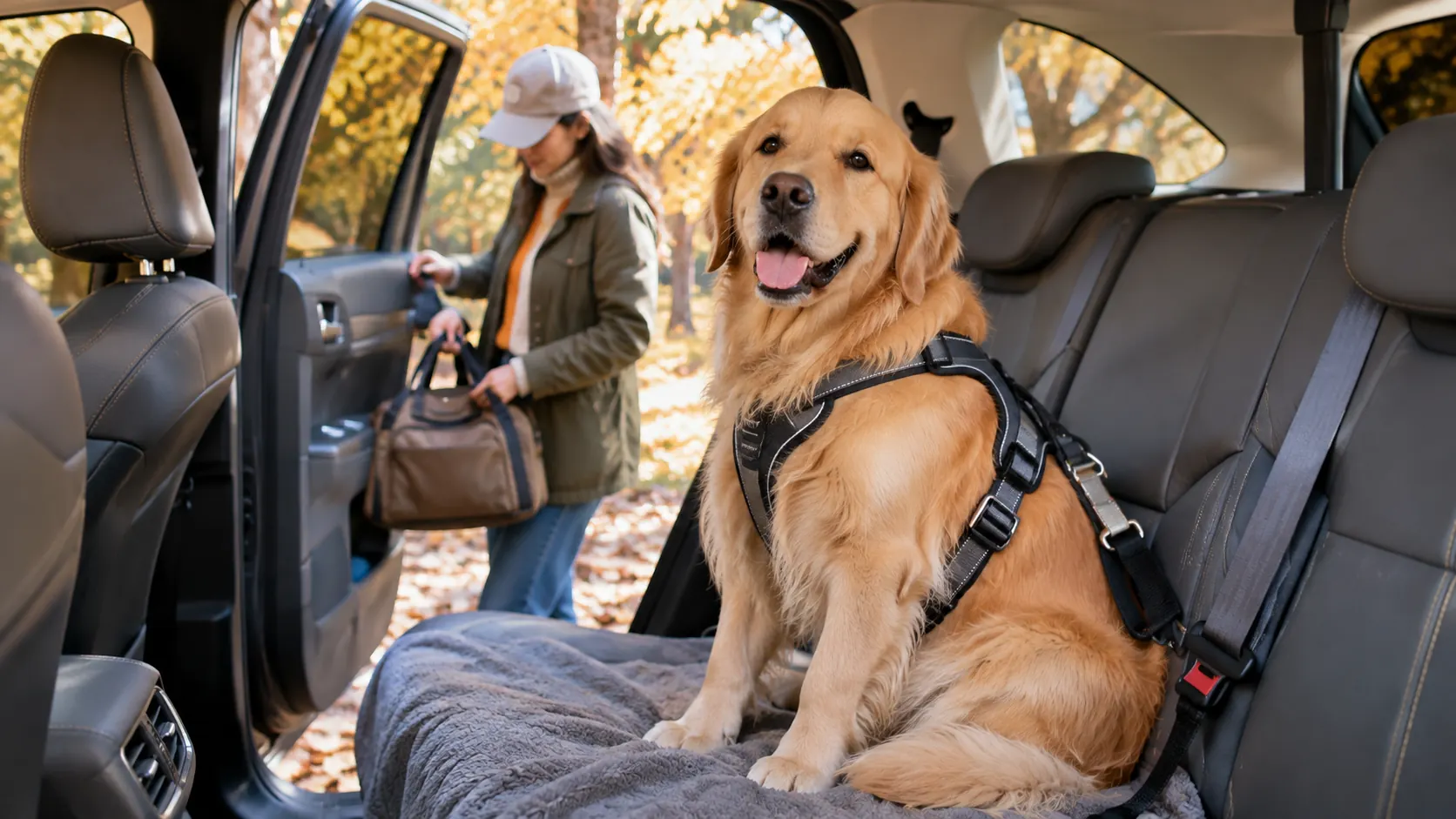
A loose dog can distract the driver and may be badly injured during sudden braking or a collision. Keep your dog in the back seat or a suitable secured cargo area, using an appropriately fitted travel restraint. Never let a dog ride on the driver’s lap or put their head out the window.
The CDC’s pet travel safety guidance recommends a secured harness or crate and warns against leaving pets alone in parked vehicles. For buying decisions, review independent testing information from the Center for Pet Safety. A regular walking harness should not automatically be treated as crash-tested equipment.
Check that your dog can sit or lie comfortably, that straps are adjusted correctly, and that the restraint cannot become tangled. Never fasten a vehicle tether to a collar around the neck.
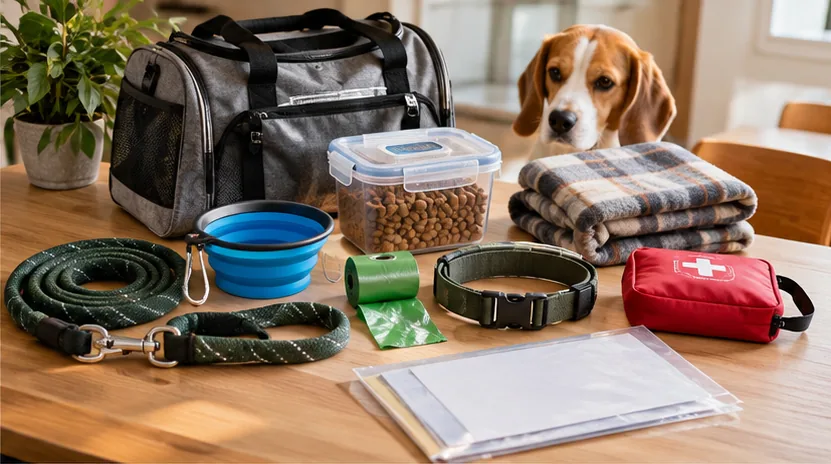
Pack a Dedicated Dog Road Trip Bag
Keep essential pet supplies in one accessible bag rather than burying them beneath suitcases. This makes feeding, bathroom stops, and unexpected delays easier to manage.
- Enough of your dog’s usual food for the trip, plus extra for delays
- Fresh drinking water and a collapsible bowl
- Leash, well-fitted harness, collar, and readable ID tag
- Medications, written dosing directions, and veterinary contact details
- Waste bags, paper towels, pet-safe wipes, and a spare towel
- Familiar blanket, bed cover, and a favorite quiet toy
- Vaccination records and any destination-specific documents
- A pet first-aid kit and a recent photograph of your dog
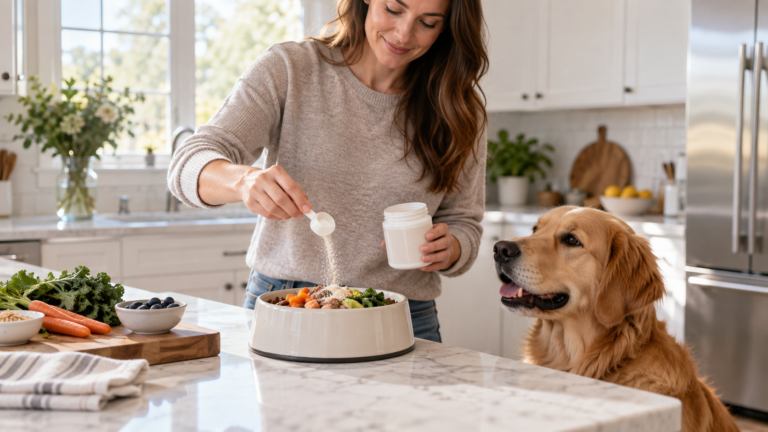
Keep meals as familiar as possible. A sudden diet change during travel may lead to digestive upset. If your dog has a sensitive stomach, our dog probiotics and gut health guide explains why supplements and feeding changes deserve veterinary guidance.
Schedule Rest Stops and Safe Sniff Breaks
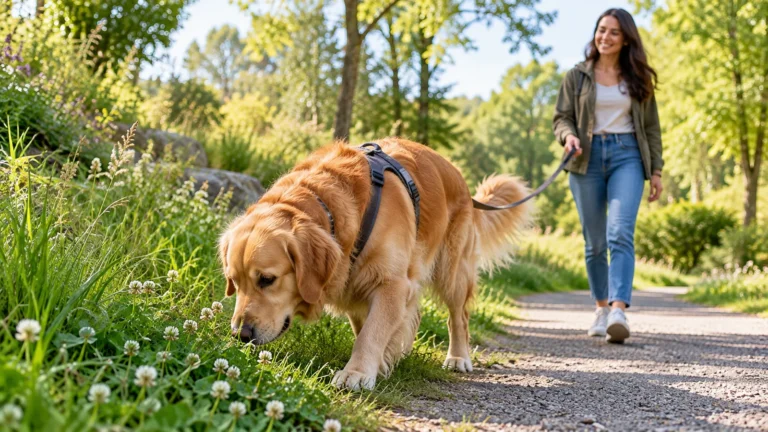
Plan stops before your dog becomes uncomfortable. The American Veterinary Medical Association suggests stopping about every two hours on long road trips so dogs can stretch and relieve themselves. Puppies, senior dogs, and pets with medical needs may require more frequent breaks.
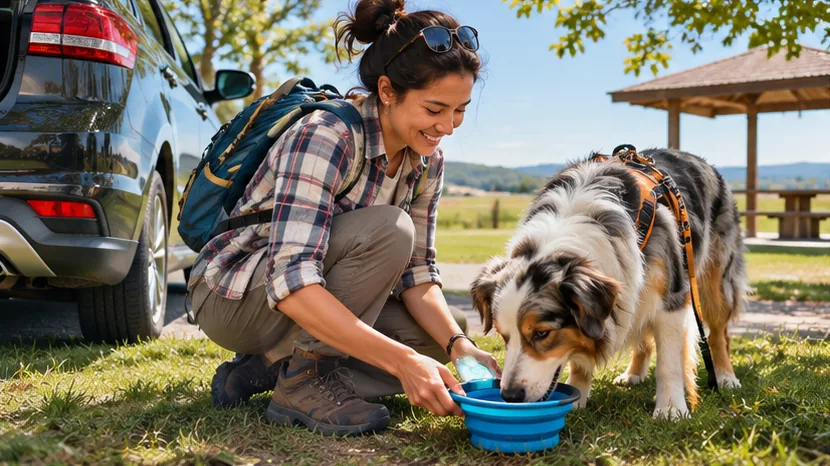
Choose quiet, safe areas away from heavy traffic. Clip on the leash before opening the car door, then offer water and a chance to sniff. Avoid crowded dog areas when your pet seems overwhelmed, and never allow a dog to wander loose at a rest stop.
Prevent Motion Sickness and Travel Anxiety
Drooling, lip licking, repeated swallowing, whining, and vomiting can indicate motion sickness or distress. Keep the car comfortably ventilated and avoid sudden acceleration or harsh braking when possible. Ask your veterinarian about meal timing and prescription options if your dog regularly becomes sick in the car.
The FDA’s pet travel training guidance emphasizes preparing animals for road travel instead of assuming they will tolerate a long ride. Do not give human motion-sickness or sedating medications without veterinary advice.
Some dogs relax with familiar bedding and soft background sound, while others prefer quiet. You can explore ideas in our article on music therapy for dogs, but keep volume low and observe your dog’s response.
Avoid Holiday Food and Temperature Hazards
Family celebrations create extra risks. Turkey bones, fatty leftovers, chocolate, grapes or raisins, alcohol, and products containing xylitol should stay out of reach. Ask guests not to share table scraps with your dog, and keep garbage cans secured. The American Animal Hospital Association’s Thanksgiving pet safety guide covers food hazards, unfamiliar visitors, open doors, and other seasonal concerns.
Temperature also matters. Never leave a dog alone in a parked car, even with cracked windows or mild weather. Heat can build rapidly, while cold conditions also present risks. Offer water regularly and adjust your plan for local weather rather than relying on the season alone.
Make Pet-Friendly Lodging Feel Familiar
Before booking, confirm the property’s dog policy, any fees, weight limits, designated walking areas, and rules about leaving pets unattended. A listing that says “pet-friendly” may still have restrictions.
Once you arrive, set up a quiet resting corner with your dog’s bed or familiar blanket and water bowl. Keep food and walking schedules close to normal. An unfamiliar hotel hallway, elevator, or noisy family home can be overstimulating, so give your dog breaks from social activity.
If your dog needs a calmer space at home, you may also like our dog-friendly home design ideas, which include tips for predictable resting areas.
Plan Extra Care for Puppies, Seniors, and Short-Nosed Dogs
Puppies need more frequent bathroom breaks and careful supervision in unfamiliar spaces. Older dogs may need non-slip footing, help getting into the vehicle, and a softer bed. Short-nosed breeds, including Pugs and Bulldogs, can face greater breathing and overheating risks. The AVMA travel FAQ recommends speaking with a veterinarian about individual travel suitability, especially for these dogs.
Check Paperwork and Emergency Contacts
Before crossing state or national borders, confirm vaccination, identification, health certificate, and entry requirements. Rules depend on where you are going and how you travel. For international trips, check the USDA APHIS pet travel guidance well ahead of departure. Also verify rules for returning home.
Save the telephone numbers and addresses of an emergency veterinarian near your destination and along your route. Keep digital and paper copies of important records. Confirm that your dog’s microchip registration and ID tag have current contact information in case you become separated.
Holiday Road Trip FAQ
How often should I stop when driving with my dog?
About every two hours is a useful starting point for many adult dogs. Stop sooner when your dog needs water, a bathroom break, or a chance to stretch.
Should I feed my dog right before leaving?
Feeding a large meal immediately before a ride may increase nausea for some dogs. Ask your veterinarian about timing if your dog has experienced motion sickness, and keep their normal food consistent.
Can I leave my dog alone in a hotel room?
Check the hotel’s rules first. Even if allowed, dogs with separation anxiety may not cope well in an unfamiliar room. A trusted sitter or an adjusted itinerary may be safer.
Final Thoughts
Successful holiday road trips with dogs start before the engine turns on. Practice shorter drives, secure your dog properly, pack familiar essentials, and build regular rest stops into your route. At your destination, protect your dog from holiday food hazards and make space for uninterrupted rest.
A little preparation helps you focus on the best part of traveling together: enjoying new places while keeping your four-legged companion safe, comfortable, and included.