Dog-friendly home design is becoming one of the biggest lifestyle trends for pet parents in 2026. More families are no longer treating dog beds, crates, feeding bowls, and grooming supplies as afterthoughts. Instead, they are designing homes that look beautiful while also making everyday life safer, cleaner, and more comfortable for their dogs.
This trend makes sense. Dogs are part of the family, and their needs affect how a home functions. A muddy walk, a nervous puppy, an aging senior dog, or a high-energy breed can all create challenges inside the home. With thoughtful planning, your space can support your dog’s health, reduce stress, and make daily routines easier.
If you already use tools like interactive enrichment toys for dog anxiety, dog-friendly home design is the next step. It helps create an environment where your dog can rest, play, eat, and feel secure.
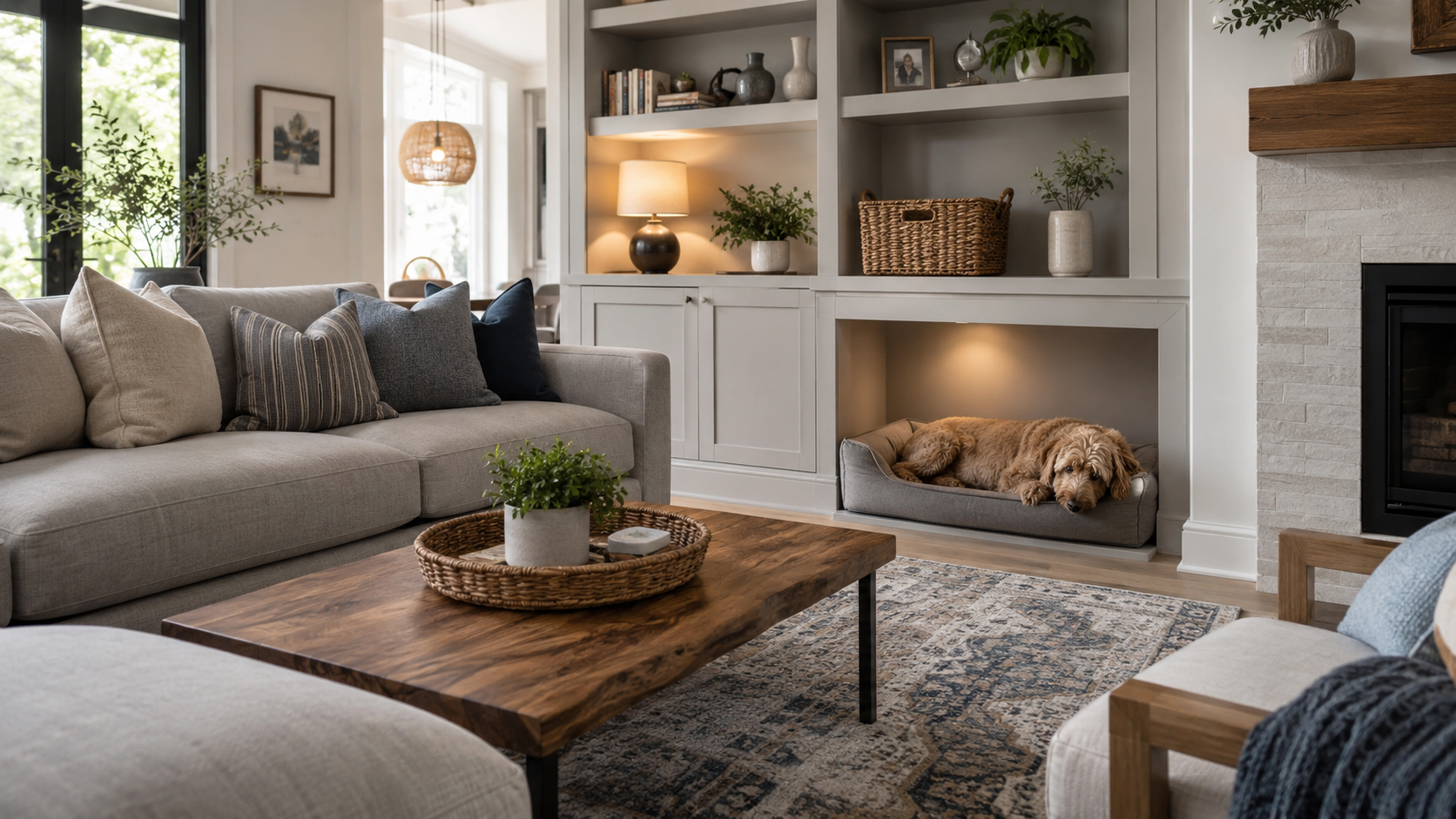
Suggested Featured Image: Modern living room with a cozy built-in dog nook, washable rug, storage baskets, and a relaxed dog resting near the sofa.
Alt Text: Modern dog-friendly home design with cozy built-in dog nook and washable living room decor.
What Is Dog-Friendly Home Design?
Dog-friendly home design means creating a space that works well for both people and pets. It does not mean turning your home into a kennel or filling every room with pet supplies. Instead, it is about choosing smart layouts, durable materials, safe furniture, and calming spaces that fit naturally into your home.
Some popular dog-friendly home design features include:
- Built-in dog beds or sleeping nooks
- Washable rugs and stain-resistant fabrics
- Pet-safe flooring
- Organized leash and toy storage
- Feeding stations with easy-to-clean surfaces
- Indoor gates or room dividers
- Dog washing areas or mudroom rinse stations
- Quiet corners for anxious or senior dogs
According to the American Kennel Club, dogs benefit from safe, predictable spaces that support their routines. A thoughtfully designed home can help make feeding, sleeping, training, grooming, and playtime more consistent.
Why Dog-Friendly Homes Are Trending
More pet owners are investing in homes that reflect their lifestyle with dogs. Many people now want interiors that are stylish but still practical. They want a clean home, but they also want their dog to feel comfortable and included.
The rise of remote work has also changed how people live with pets. Dogs spend more time near their owners during the day, so living rooms, offices, kitchens, and bedrooms must work for shared routines.
Another reason this trend is growing is the focus on pet wellness. Owners are paying more attention to stress, sleep, mobility, and mental stimulation. A home environment can influence all of these. For example, a nervous dog may feel calmer with a quiet retreat, while a senior dog may need non-slip flooring and easier access to resting areas.
For dogs in apartments or busy neighborhoods, home design can also support emotional balance. You can pair a quiet indoor space with ideas from our guide on mental health enrichment tools for urban dogs.
Start With a Cozy Dog Zone
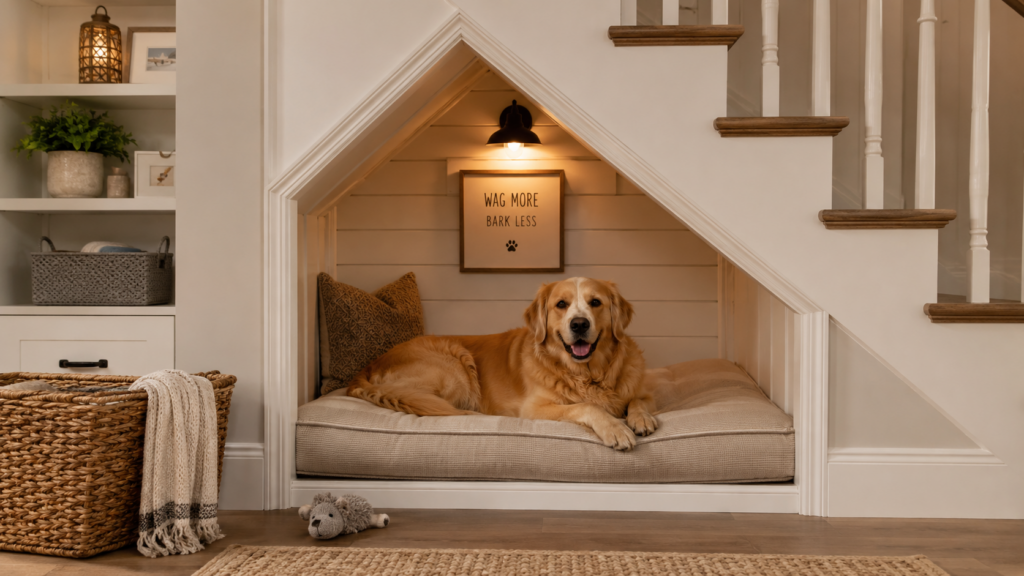
Every dog needs a place where they can relax without being disturbed. A dog zone can be a bed in the corner, a crate with a soft mat, a built-in nook under stairs, or a quiet space near the living room.
The goal is to create a spot that feels safe and familiar. This area should be away from heavy foot traffic, loud appliances, and direct drafts. If your dog gets anxious, place the bed near a wall or inside a partially enclosed space so they feel protected.
A good dog zone may include:
- A supportive bed
- A washable blanket
- A favorite chew toy
- Soft lighting
- A nearby water bowl
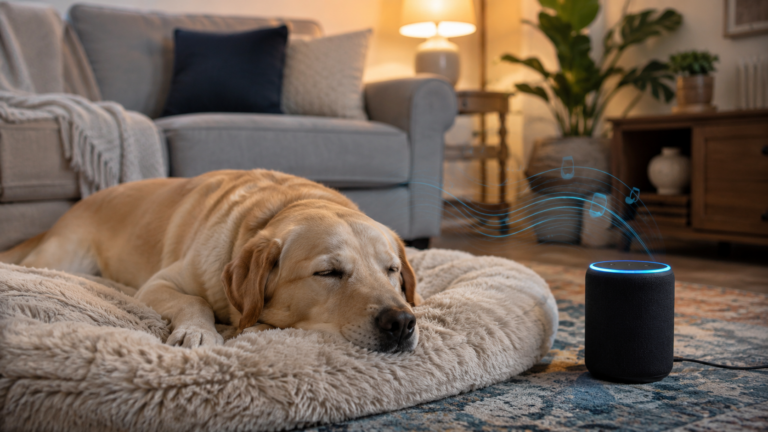
- Calming background sound when needed
If your dog enjoys calming routines, you may also try soft music or white noise. This can be helpful during storms, fireworks, or busy household activity.
Choose Dog-Safe Flooring
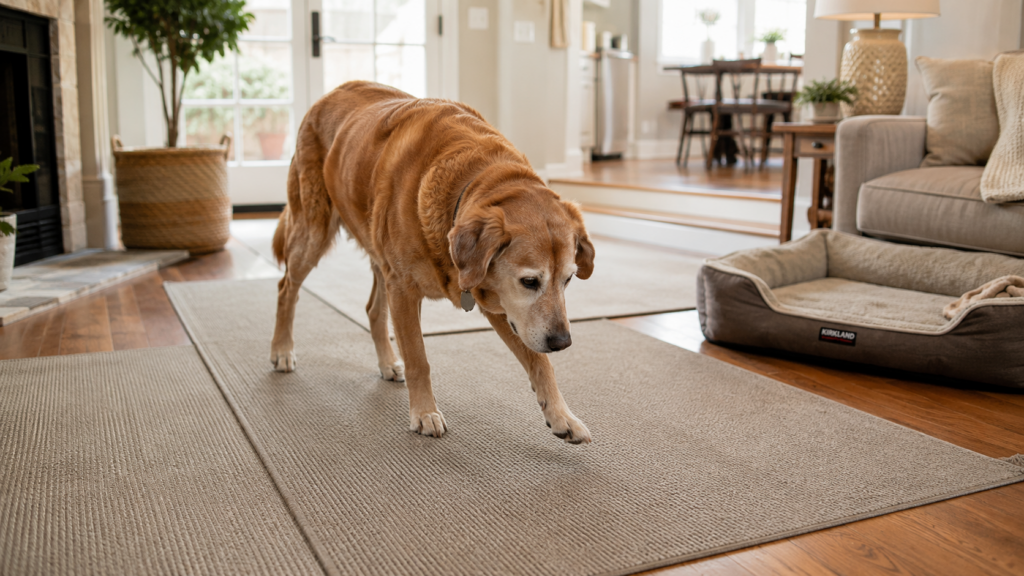
Flooring is one of the most important parts of dog-friendly home design. Dogs need surfaces that are easy to clean and safe to walk on. Slippery floors can be difficult for puppies, large breeds, and senior dogs.
Hardwood floors may look beautiful, but they can scratch easily and become slippery. Tile can be durable but may feel cold or slick. Many pet owners choose luxury vinyl, sealed concrete, cork, or textured flooring because these options are often easier to maintain.
You can also add washable rugs or runners in areas where your dog walks often. This helps provide traction while protecting the floor underneath.
The American Veterinary Medical Association encourages pet owners to consider safety and comfort as part of responsible pet care. Non-slip surfaces can be especially important for older dogs or dogs with mobility concerns.
Create a Smart Feeding Station
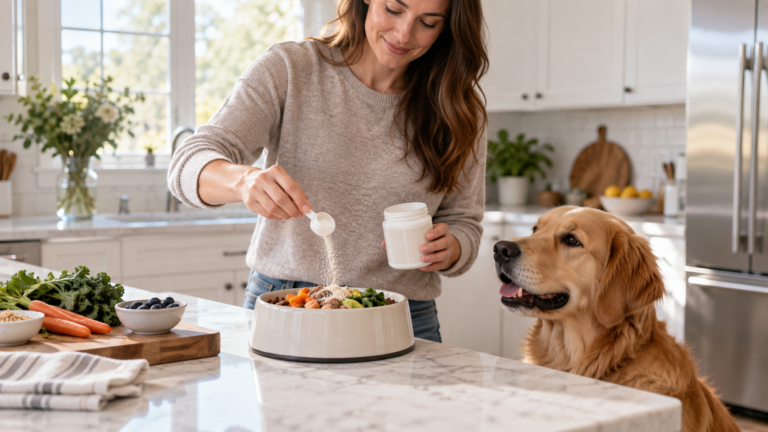
A feeding station keeps bowls, food, treats, and supplements organized. It also helps prevent messes from spreading across the kitchen or living area.
A simple feeding station may include a mat under the bowls, a nearby container for food, and a shelf or drawer for treats. For a more polished look, some homeowners build feeding stations into kitchen cabinets or mudroom storage.
When designing a feeding area, choose surfaces that are easy to wipe clean. Keep food containers sealed to protect freshness and avoid pests. If your dog eats too quickly, consider a slow feeder bowl or puzzle feeder.
For nutrition-related ideas, you can also read our post on freeze-dried and air-dried dog foods.
Use Washable and Durable Materials
Dogs bring love, but they also bring fur, dirt, drool, and the occasional accident. That is why washable and durable materials are essential.
Look for:
- Washable slipcovers
- Stain-resistant upholstery
- Machine-washable rugs
- Durable throw blankets
- Scratch-resistant surfaces
- Easy-clean wall paint
These choices make your home easier to maintain without sacrificing style. They are especially helpful for families with puppies, multiple dogs, or breeds that shed heavily.
The ASPCA recommends keeping pet spaces clean and safe as part of overall animal care. A home that is easier to clean can also help reduce odors and allergens.
Design a Better Entryway or Mudroom
The entryway is one of the busiest areas in a dog-friendly home. It is where muddy paws, wet coats, leashes, collars, and outdoor gear often collect.
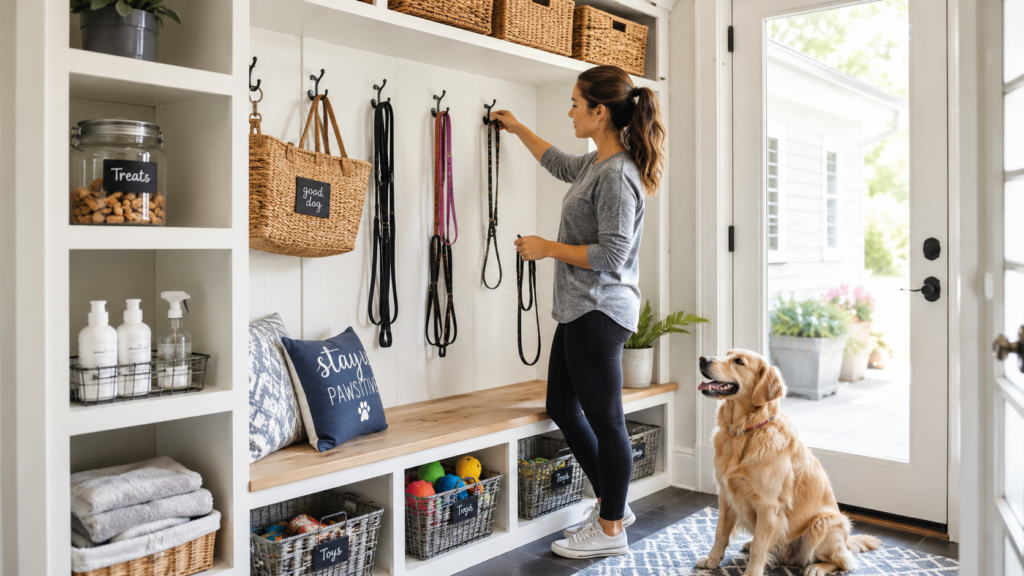
A dog-friendly entryway may include:
- Hooks for leashes and harnesses
- A basket for toys or towels
- A washable mat near the door
- A small bench for putting on shoes
- A storage area for poop bags and grooming wipes
- A dog wash station if space allows
Even a small apartment can benefit from a simple entryway setup. A tray, a towel basket, and a leash hook can make walks easier and keep the rest of your home cleaner.
Make Space for Enrichment
A beautiful home should also support your dog’s mind. Dogs need enrichment to prevent boredom, stress, and destructive behavior.
Create a small enrichment zone where your dog can enjoy puzzle toys, chew toys, lick mats, or treat-dispensing games. This area should be easy to clean and safe for supervised play.
Rotating toys can also help keep your dog interested. Instead of leaving every toy out at once, store some away and bring them back later. This makes old toys feel new again.
For more ideas, visit our guide on dog training trends and smarter learning.
Consider Senior Dog Needs
If you have an older dog, home design becomes even more important. Senior dogs may struggle with stairs, slippery floors, high beds, and hard surfaces.
Helpful senior-friendly updates include:
- Orthopedic dog beds
- Ramps or pet stairs
- Non-slip rugs
- Raised food and water bowls if recommended by your vet
- Night lights in hallways
- Easy access to outdoor potty areas
The PetMD library offers helpful information about senior dog care, mobility, and wellness. If your dog is showing stiffness, pain, or sudden behavior changes, it is best to speak with a veterinarian.
Keep Safety First
Dog-friendly design should always include safety. Many common household items can be risky for dogs, including certain plants, cleaning products, electrical cords, small objects, and unsecured trash bins.
Keep harmful items out of reach and choose pet-safe products whenever possible. The CDC Healthy Pets resource explains why clean environments, safe handling, and responsible pet care matter for both pets and people.
You should also check your home for choking hazards, unstable furniture, and open windows or balconies. A safe home gives your dog freedom while reducing preventable risks.
Final Thoughts
Dog-friendly home design is more than a decorating trend. It is a practical way to make life easier, safer, and more enjoyable for both you and your dog.
By creating cozy rest areas, choosing durable materials, organizing pet supplies, adding enrichment spaces, and improving safety, you can build a home that supports your dog’s daily wellness.
The best part is that you do not need a major renovation. Small updates, like washable rugs, a better feeding station, organized leash storage, or a quiet dog nook, can make a big difference.
As more pet parents design their homes around real dog needs, this trend is likely to keep growing. A thoughtful home helps your dog feel secure, comfortable, and truly part of the family.