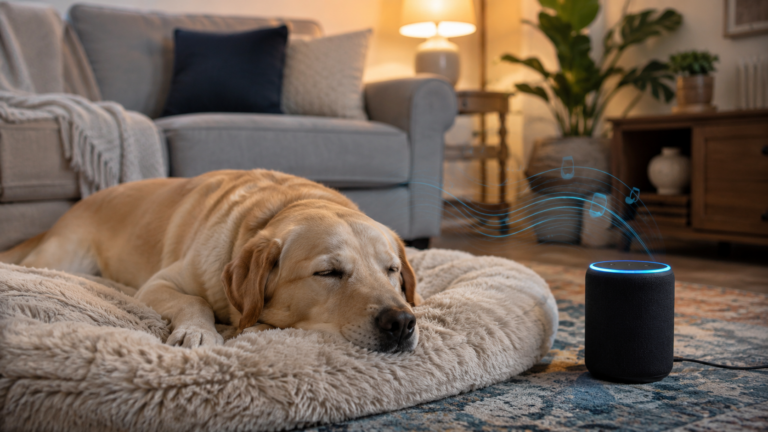
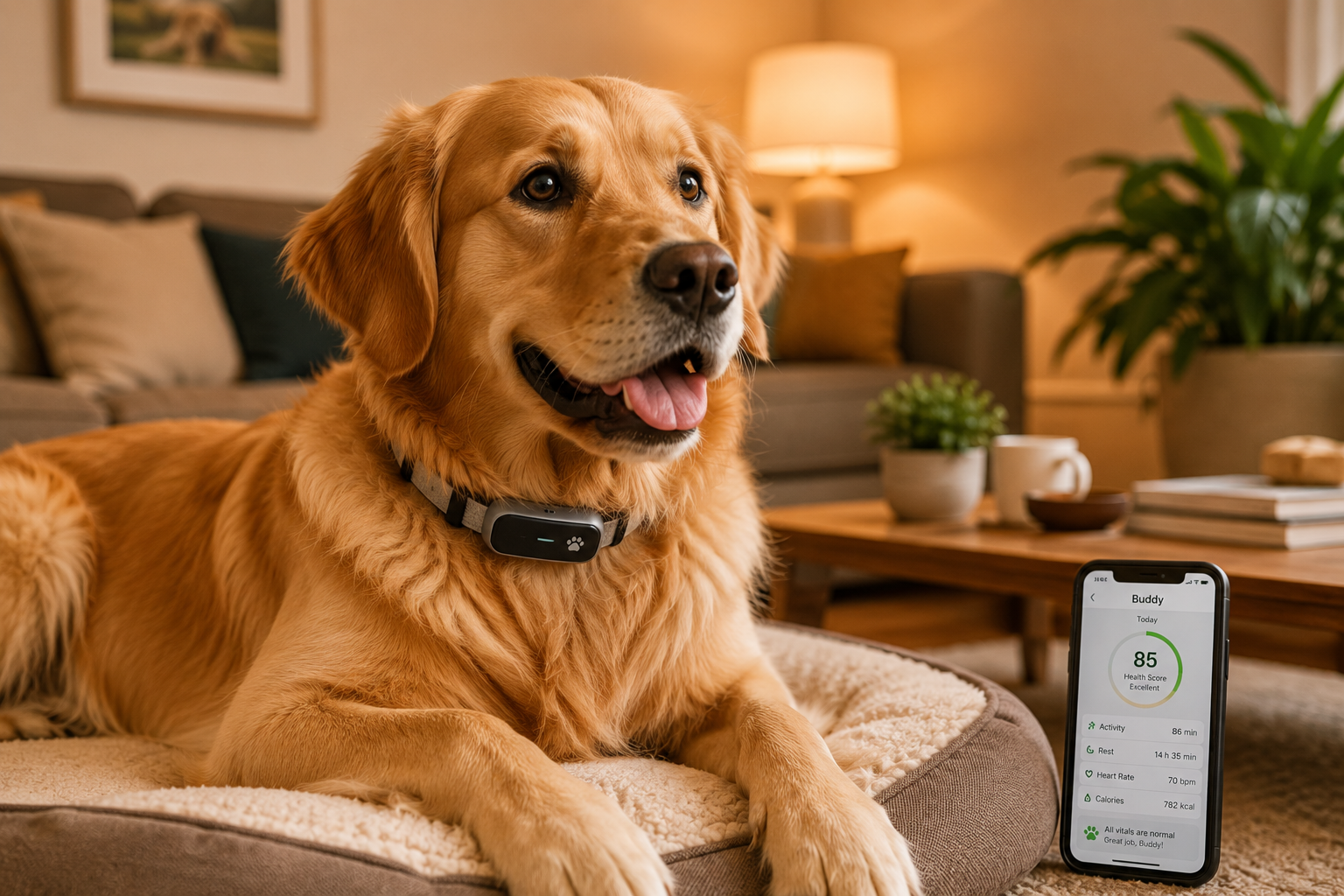
Technology is transforming pet care faster than ever, and one of the biggest trends in 2026 is the rise of AI-powered dog health trackers. These smart devices do more than count steps. They monitor sleep patterns, activity levels, stress signals, heart rate, and behavioral changes to help dog owners better understand their pets.
As more people look for proactive ways to support their dogs’ wellness, AI pet technology is becoming a growing part of everyday life. Smart collars and wearable trackers now provide insights that were once only available during veterinary visits. For many pet parents, these tools offer a new way to monitor health and spot changes earlier.
If you already enjoyed our guide on Dog Training Trends: Tech, Enrichment & Smarter Learning, this latest trend takes smart pet care even further.
What Are AI Dog Health Trackers?
AI dog health trackers are wearable devices designed to collect and analyze health data from dogs throughout the day. Most devices attach to a collar and sync with a mobile app. Using artificial intelligence, the tracker can learn your dog’s normal habits and identify unusual patterns.
Modern trackers may monitor:
- Daily activity levels
- Sleep quality
- Heart rate trends
- Scratching and licking behavior
- Stress indicators
- Calories burned
- Location tracking
- Restlessness or inactivity
According to The American Kennel Club, wearable pet technology continues to expand as more owners prioritize preventive wellness and early health monitoring.
Why Pet Owners Are Using Smart Dog Trackers
Many pet owners want more insight into their dog’s health between vet visits. Since dogs cannot explain discomfort or pain, changes in behavior are often the first clue that something may be wrong.
AI-powered trackers may help identify subtle shifts before symptoms become obvious. For example, a sudden drop in activity or changes in sleep patterns could signal discomfort, anxiety, or illness.
These devices are especially popular among:
- Owners of senior dogs
- Active and athletic breeds
- Dogs with anxiety
- Dogs recovering from injuries
- Urban pet owners
- People with busy schedules
Some pet parents also use these trackers to maintain healthier routines. Daily movement goals, hydration reminders, and activity summaries may encourage more exercise and engagement.
For dogs living in busy environments, combining smart tracking with mental stimulation tools may support emotional wellness. You can also explore our article on Interactive & Enrichment Toys: Mental Stimulation to Reduce Dog Anxiety.
How AI Technology Learns Dog Behavior
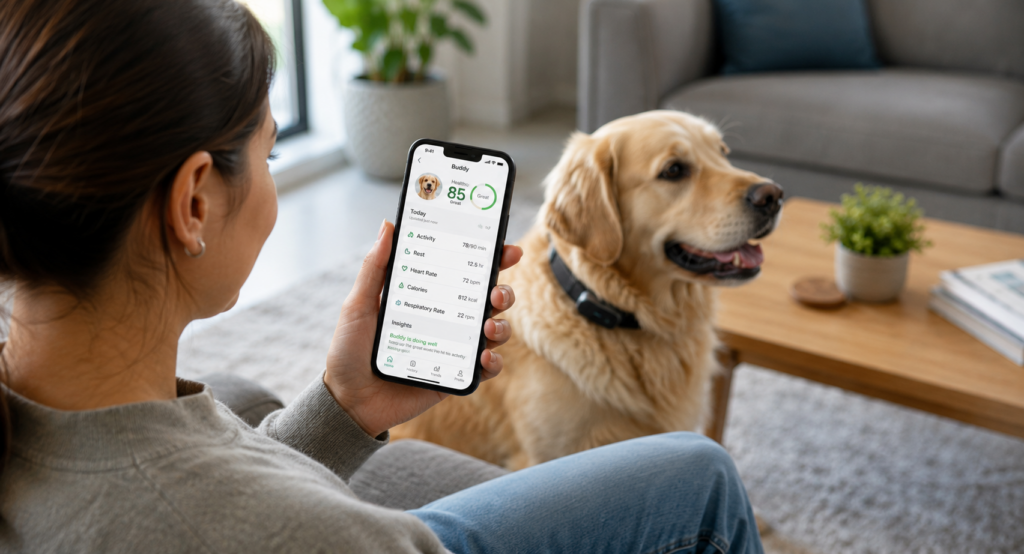
Artificial intelligence works by collecting large amounts of behavioral data over time. The tracker learns what is normal for your dog based on age, breed, size, and daily habits.
For example, if your dog usually sleeps eight hours at night but suddenly becomes restless for several nights in a row, the app may flag the behavior. Similarly, excessive scratching or licking could indicate allergies, skin irritation, or stress.
Some advanced devices even compare data with thousands of dogs in similar categories to provide deeper insights.
Companies are increasingly investing in predictive pet health technology. According to Forbes, AI-based pet monitoring has become one of the fastest-growing sectors in the pet tech industry.
Benefits of AI Dog Health Trackers
1. Early Detection of Health Changes
One major benefit is spotting potential problems earlier. While trackers cannot diagnose medical conditions, they may help owners notice unusual patterns faster.
Reduced movement, increased pacing, or disrupted sleep may signal discomfort worth discussing with a veterinarian.
2. Better Weight Management
Obesity remains a growing issue among pets. AI trackers help owners monitor activity and calorie burn more accurately.
Combined with proper nutrition and exercise, these insights may support healthier weight management.
3. Improved Fitness for Active Dogs
Working dogs, sporting breeds, and highly active dogs benefit from activity monitoring. Owners can track exercise intensity and recovery periods more effectively.
Some trackers even provide personalized activity recommendations.
4. Anxiety and Stress Monitoring
Stress-related behaviors often go unnoticed until they become severe. Certain smart collars now analyze barking frequency, pacing, and restlessness.
This may help owners understand triggers and improve routines for anxious pets.
You can learn more about emotional wellness in our guide on Mental Health & Enrichment Tools for Urban Dogs.

Popular Features in 2026 Smart Dog Devices
AI dog trackers have evolved rapidly in recent years. Some of the most popular features in 2026 include:
- GPS location tracking
- Health trend analysis
- Sleep monitoring
- Temperature alerts
- Escape notifications
- Virtual activity goals
- Behavioral pattern analysis
- Multi-pet tracking
Several major pet technology brands now offer subscription-based wellness reports and personalized recommendations.
According to PetMD, wearable technology may help owners build stronger daily wellness routines for their pets.
Are AI Pet Trackers Replacing Veterinarians?
No. AI trackers are tools that provide additional information, but they are not replacements for veterinary care.
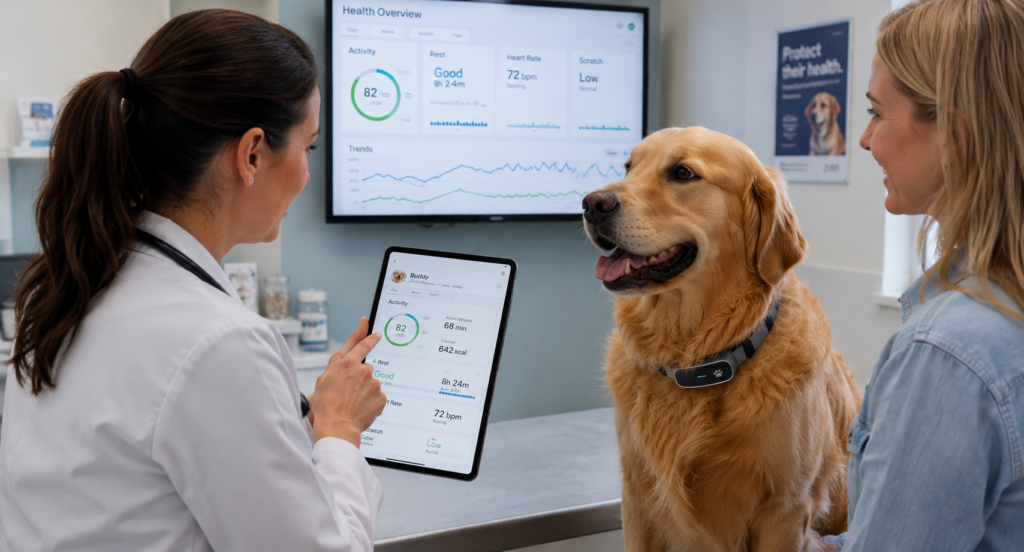
Veterinarians still play the most important role in diagnosing and treating medical conditions. However, many pet owners now bring tracker data to appointments to provide more context about changes in behavior or activity.
This additional information may support more informed conversations during wellness visits.
The American Veterinary Medical Association notes that wearable pet technology may become increasingly useful in preventive care and ongoing health monitoring.
Things to Consider Before Buying One
Not all AI pet trackers are the same. Before purchasing a device, consider:
- Battery life
- Water resistance
- Comfort and size
- Monthly subscription costs
- GPS accuracy
- Mobile app quality
- Health tracking features
- Breed compatibility
Some devices focus mainly on GPS tracking, while others emphasize wellness and behavioral monitoring.
Reading reviews and comparing features carefully may help you choose the best fit for your dog’s lifestyle.
The Future of Smart Pet Care
The pet technology industry continues to grow rapidly. In the future, AI dog trackers may become even more advanced, with features such as real-time hydration monitoring, emotion analysis, and predictive wellness alerts.
Some companies are already experimenting with AI systems that analyze vocal patterns and facial expressions in pets.
As technology improves, dog owners may gain deeper insights into their pets’ physical and emotional well-being than ever before.
Final Thoughts
AI dog health trackers are becoming one of the most talked-about trends in pet care for 2026. These smart devices offer valuable insights into activity, sleep, stress, and behavior while helping owners stay more connected to their dogs’ daily wellness.
Although these trackers are not substitutes for veterinary care, they may help owners identify changes earlier and maintain healthier routines.
As smart pet technology continues evolving, wearable health tracking could become a regular part of responsible dog ownership in the years ahead.
For more modern pet care tips, explore our latest guides on Freeze-Dried & Air-Dried Dog Foods.
External Resource/s: