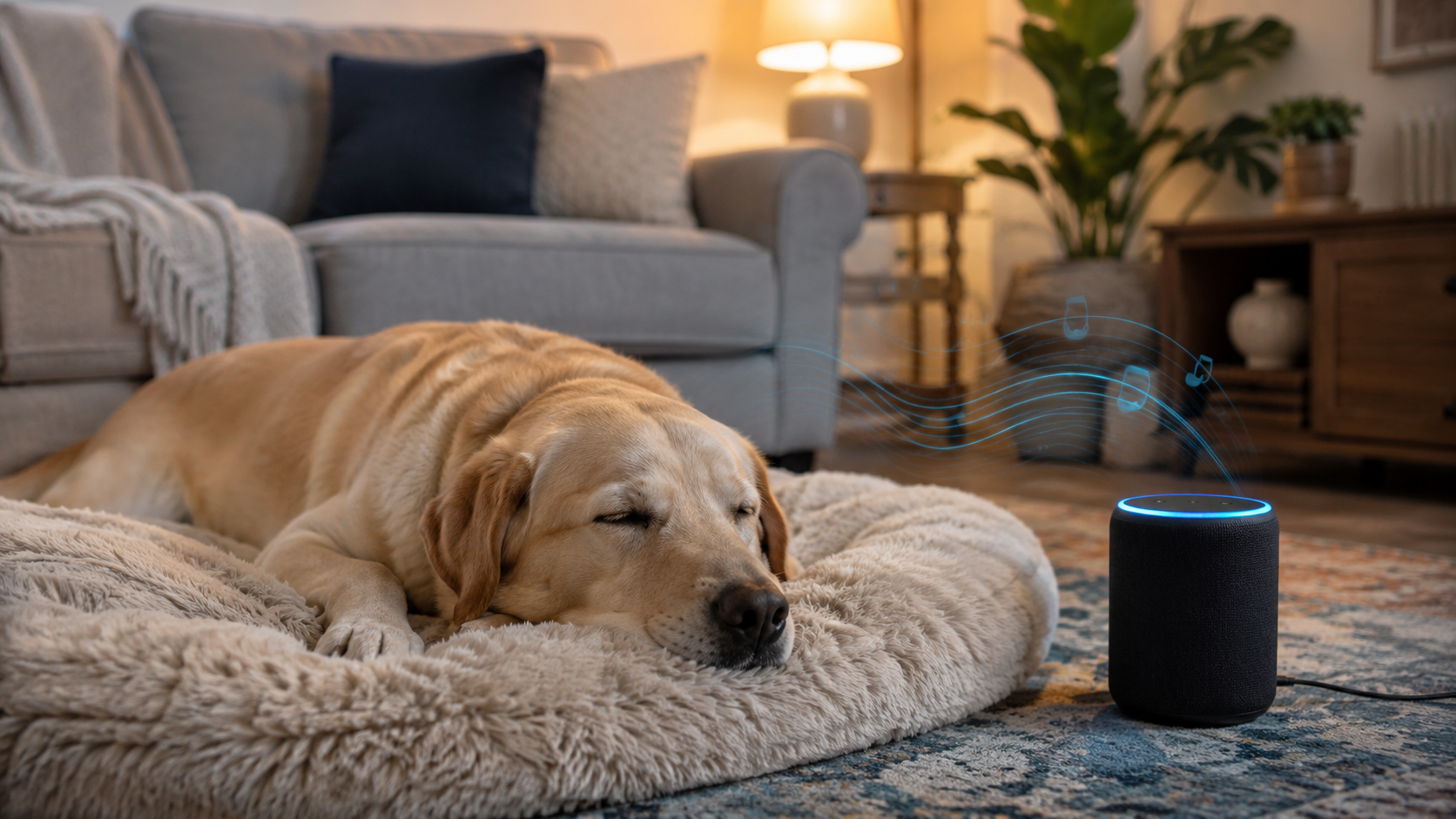
From calming anxious pups during thunderstorms to helping senior dogs relax, music therapy for dogs is becoming a major trend among pet parents. Research shows that the right music can reduce stress, lower heart rate, and even improve sleep quality in dogs. Let’s explore how it works and how you can use it at home.
What Is Music Therapy for Dogs?
Music therapy for dogs involves playing specially selected music to support their emotional and physical wellbeing. Unlike generic background noise, therapeutic music is designed with specific tempos, rhythms, and frequencies that influence a dog’s nervous system.
Dogs can react strongly to sound. Loud noises, sudden changes in rhythm, and high-pitched tones may cause stress. On the other hand, soft and steady music may create a sense of comfort and routine.
According to the American Kennel Club, sound can play a powerful role in a dog’s environment and behavior. This is one reason many pet parents now use calming playlists during stressful situations.
Top Benefits of Music Therapy for Dogs
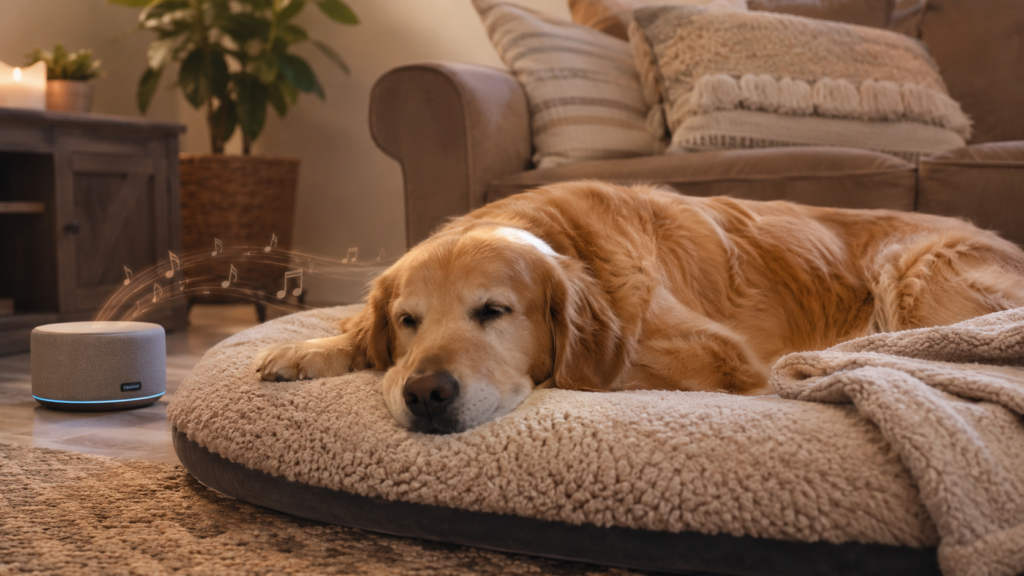
Many studies and real-life experiences show that music can positively affect dogs in several ways. While music is not a replacement for proper veterinary care or behavioral training, it may support your dog’s overall wellness.
- Reduces Anxiety: Soothing music may help calm dogs during fireworks, thunderstorms, vet visits, grooming, and separation periods.
- Improves Sleep: Relaxing melodies may help dogs, especially senior dogs, sleep more deeply and rest longer.
- Lowers Stress Hormones: Studies suggest dogs may show fewer stress-related behaviors when exposed to calming music.
- Supports Behavioral Training: Music may help create a calm learning environment, making training sessions easier.
- Enhances Healing: Calming tunes may support dogs recovering from illness, surgery, or stressful experiences.
The American Veterinary Medical Association supports the use of environmental enrichment as part of overall pet wellness. Music can be one simple part of a calming home environment.
What Kind of Music Is Best for Dogs?
Not every type of music is suitable for dogs. Fast beats, loud instruments, and sudden sounds may increase stress instead of reducing it. The best music for dogs usually has a slow tempo, soft rhythm, and steady volume.
Some dog-friendly music styles include:
- Classical Music: Gentle piano, strings, and orchestral pieces may help calm dogs.
- Reggae: Some studies suggest reggae may have a relaxing effect on dogs.
- Soft Rock: Mellow guitar and smooth vocals may feel comforting.
- Ambient Music: Nature sounds, soft melodies, and low-frequency tones may help reduce stress.
- Special Dog Playlists: Some streaming platforms offer playlists made specifically for pets.
Research from Colorado State University has explored how shelter dogs respond to different sound environments. Calm music may help create a quieter and less stressful atmosphere.
How to Use Music Therapy at Home
Getting started with music therapy for dogs is simple. The key is to create a routine and observe how your dog responds. Some dogs relax quickly, while others need time to adjust to new sounds.
- Create a Calm Space: Choose a quiet room away from distractions, loud appliances, and outdoor noise.
- Play Music at a Low Volume: Dogs have sensitive hearing, so the sound should be gentle and comfortable.
- Watch Your Dog’s Body Language: Look for signs of relaxation, such as soft eyes, lying down, slower breathing, and reduced pacing.
- Use Music During Stressful Events: Play calming music before fireworks, storms, grooming, car rides, or vet visits.
- Stay Consistent: Repeating the same calming routine may help your dog associate music with safety and rest.
You can also combine music therapy with other calming strategies. For example, pairing soft music with enrichment toys may keep your dog relaxed and mentally engaged. For more ideas, read our guide on interactive enrichment toys for reducing dog anxiety.
Sample Dog-Friendly Playlists
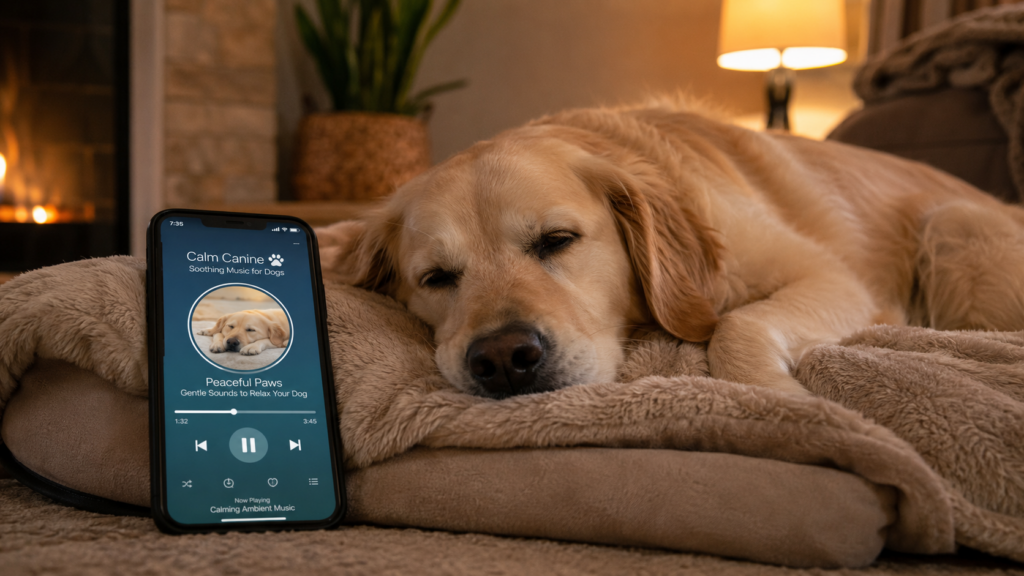
You do not need a complicated setup to try music therapy. A phone, speaker, or smart home device can work well. Just keep the volume soft and choose steady, relaxing sounds.
Here are some playlist ideas:
- Classical Calm: Mozart, Beethoven, Debussy, and gentle piano music.
- Reggae Rest: Soft reggae songs with slow beats and warm rhythms.
- Soft Rock Comfort: Acoustic guitar, mellow classics, and smooth vocals.
- Nature Sounds: Rain, ocean waves, birdsong, and forest ambience.
- Pet-Specific Music: Curated playlists on Spotify and YouTube.
Start with short sessions of 15 to 30 minutes. If your dog seems comfortable, you can slowly increase the length of time.

When Music Therapy Works Best
Music therapy may be especially useful during events that trigger fear, stress, or restlessness. Many dog owners use calming music as part of a larger routine for anxiety management.
Music therapy may work well for:
- Thunderstorms and fireworks
- Separation anxiety
- Car rides and travel
- Vet visits and grooming appointments
- Recovery after surgery or illness
- Nap time and bedtime routines
- Senior dogs with restlessness
- Puppies adjusting to a new home
If your dog has severe anxiety, music alone may not be enough. A veterinarian or certified dog behavior professional can help create a more complete care plan.
Music Therapy and Dog Training
Music can also support training when used correctly. A calm environment helps dogs focus better and reduces distractions. This may be helpful for dogs that become overstimulated during learning sessions.
For example, you can play soft background music before a short training session. This may help your dog settle down and prepare to listen. Pairing music with positive reinforcement may create a calmer, more predictable routine.
If your dog is learning new behaviors, check out our post on dog training trends and smarter learning.
Can Music Help Senior Dogs?
Senior dogs may benefit from music therapy because many older dogs experience changes in sleep, mobility, and anxiety levels. Gentle background music may help create comfort during rest periods.
Older dogs may also become more sensitive to noise. Calm music can help mask sudden sounds outside the home, such as traffic, neighbors, or construction.
For senior pets, music therapy works best when paired with a cozy bed, soft lighting, and a predictable daily routine.
Common Mistakes to Avoid
Music therapy is simple, but a few mistakes can reduce its benefits. Avoid playing music too loudly, switching tracks too often, or using music with sudden dramatic changes.
Also, avoid forcing your dog to stay in the room. Give your dog the freedom to move away if they do not enjoy the sound.
Every dog is different. Some dogs love classical music, while others respond better to nature sounds or soft rock. The best approach is to test different styles and watch your dog’s reaction.
Final Thoughts
Music therapy for dogs is a simple, natural, and affordable way to support your dog’s emotional wellbeing. It may help reduce anxiety, improve sleep, create a calmer home environment, and support better routines.
Whether your dog struggles with storms, separation anxiety, travel stress, or restlessness, calming music may become a helpful part of their daily care.
For more ways to support your dog’s happiness and wellness, explore our guides on mental health enrichment tools for urban dogs and freeze-dried and air-dried dog foods.