
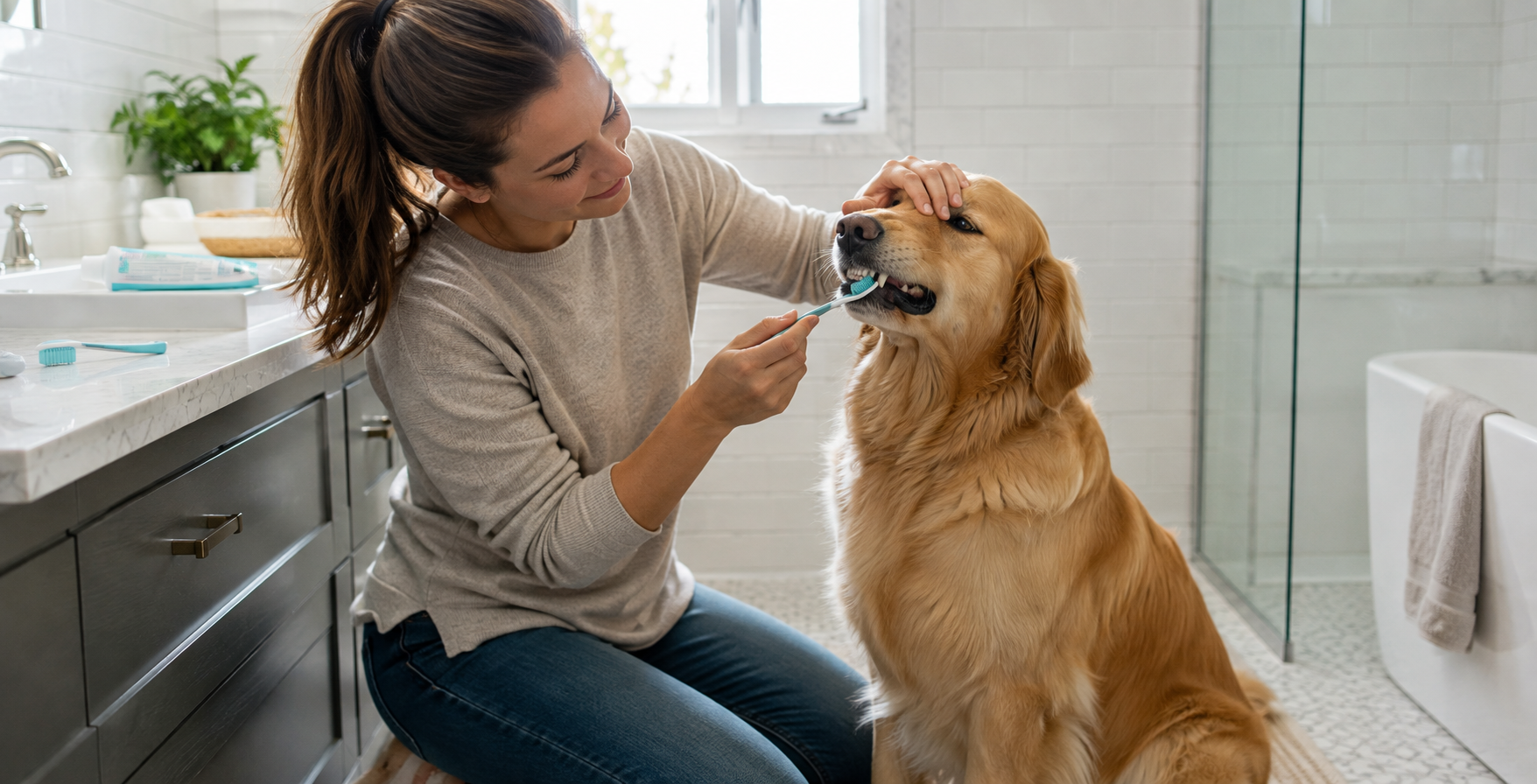
At-home dog dental care is becoming one of the most important pet wellness trends for 2026. More dog owners are realizing that clean teeth are not just about fresh breath. A healthy mouth can affect how comfortably your dog eats, plays, sleeps, and enjoys everyday life.
Many pet parents focus on food, exercise, grooming, and enrichment, but dental care is often overlooked until bad breath, tartar, or gum problems appear. The good news is that a simple home routine can make a big difference. With the right tools, patience, and regular veterinary checkups, you can help protect your dog’s teeth and gums before problems become painful.
If you already care about whole-body wellness, dental care fits naturally with other routines like dog-friendly home design, interactive enrichment toys, and better nutrition choices.
Why Dog Dental Care Matters
Your dog’s mouth collects plaque just like a person’s mouth does. When plaque is not removed, it can harden into tartar. Over time, this buildup may irritate the gums and contribute to dental disease. Dogs with dental discomfort may chew differently, avoid hard food, paw at their mouth, drool more, or become less playful.
The American Veterinary Medical Association encourages pet owners to pay attention to dental health because oral problems can affect a pet’s comfort and quality of life. Regular dental care at home is not a replacement for professional veterinary care, but it can help support your dog between checkups.
A clean mouth can also improve your dog’s daily routine. Dogs that feel comfortable chewing are more likely to enjoy food, treats, toys, and enrichment activities. That is why dental care should be part of a complete wellness plan.
Signs Your Dog May Need Dental Attention
Bad breath is common in dogs, but very strong or unusual odor should not be ignored. It may be a sign that plaque, tartar, or gum irritation is present. Some dogs hide discomfort well, so small changes matter.
Watch for these warning signs:
- Persistent bad breath
- Yellow or brown buildup on teeth
- Red, swollen, or bleeding gums
- Drooling more than usual
- Dropping food while eating
- Chewing on only one side of the mouth
- Pawing at the face or mouth
- Loose, broken, or missing teeth
- Loss of interest in chew toys
If you notice these signs, schedule a visit with your veterinarian. The American Animal Hospital Association explains that professional dental care and home care work together to help protect pets from pain, tooth loss, and other health problems.
Start With Tooth Brushing
Brushing is one of the best at-home habits for dog dental care. The goal is to remove plaque before it hardens into tartar. Many dogs do not enjoy brushing at first, so start slowly and keep the experience positive.
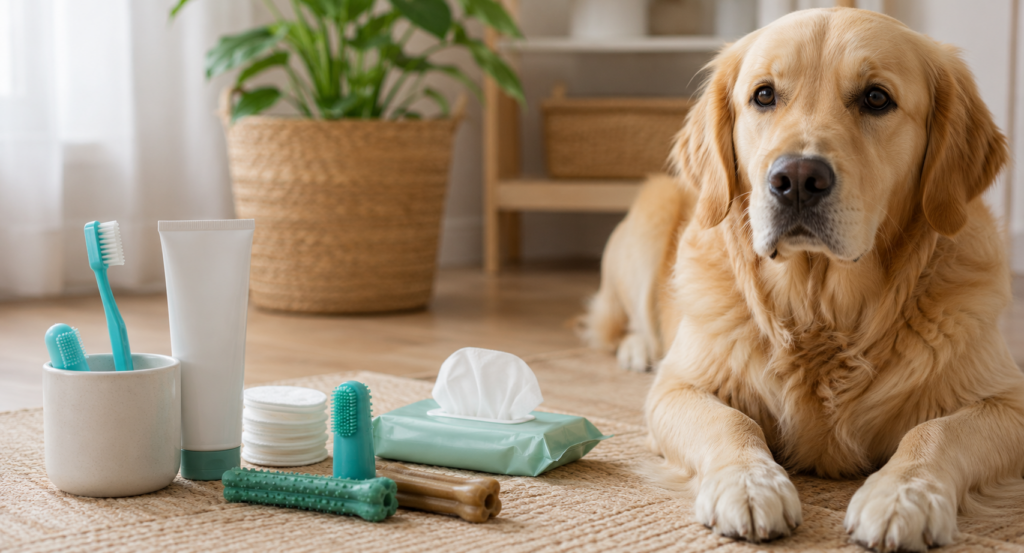
Use a toothbrush designed for dogs or a soft finger brush. Never use human toothpaste, because it may contain ingredients that are unsafe for pets. Choose toothpaste made specifically for dogs, preferably in a flavor your dog enjoys.
Begin by letting your dog smell and taste the toothpaste. Then gently touch their lips and gums for a few seconds. Once they are comfortable, brush a few teeth at a time using small circular motions. Focus on the outside surfaces of the teeth, especially the back teeth where buildup often forms.
The ASPCA recommends brushing with gentle circular motions and placing the brush at about a 45-degree angle to the teeth. Keep sessions short, calm, and rewarding.
Build a Simple Weekly Dental Routine
A good routine does not need to be complicated. The best dental care plan is the one you can repeat consistently. Daily brushing is ideal, but if that feels difficult at first, start with a few times per week and build from there.
Here is a simple weekly routine:
- Daily: Check your dog’s breath, eating habits, and chewing comfort.
- Three to seven times weekly: Brush your dog’s teeth with pet-safe toothpaste.
- Several times weekly: Offer safe dental chews or chew toys when supervised.
- Weekly: Lift your dog’s lips and look for redness, swelling, tartar, or broken teeth.
- As recommended: Schedule veterinary dental exams and cleanings.
Pair dental care with something your dog already enjoys. For example, brush after an evening walk, before a bedtime treat, or after a calm enrichment session. If your dog benefits from calming routines, you can also use ideas from our guide on music therapy for dogs to help create a relaxed environment.
Dental Chews Can Help, But Choose Carefully
Dental chews can support oral care, but they should not replace brushing. Some chews help reduce plaque and tartar through chewing action, while others mainly freshen breath. Not all products are equal.
When choosing dental products, look for options accepted by the Veterinary Oral Health Council. The VOHC reviews products for plaque and tartar control when used as directed. This can help pet owners avoid vague marketing claims and choose products with stronger support.
Always choose the right size for your dog. A chew that is too small can become a choking risk, while one that is too hard may damage teeth. Avoid bones, antlers, or very hard chews if your veterinarian advises against them.
Supervision matters. Watch your dog while chewing, especially if they gulp treats or break large pieces off quickly.
What About Dental Wipes, Water Additives, and Sprays?
Some dogs strongly resist tooth brushing. Dental wipes, gels, sprays, and water additives may help as part of a broader routine. These products can be useful for freshening breath or reducing buildup, but results vary.
If brushing is not possible right away, dental wipes may be a good starting point. They allow you to gently rub the tooth surface and gums without a toothbrush. This can help your dog get used to mouth handling.
Water additives and sprays may be easier for busy owners, but they should be selected carefully. Ask your veterinarian which products are appropriate for your dog’s age, health, and dental condition.
The AAHA dental care guidelines explain that home oral care products should be chosen thoughtfully and used regularly to support oral health.
Food, Treats, and Dental Health
Nutrition also plays a role in oral wellness. Some veterinary dental diets are designed to help reduce tartar through texture and chewing action. However, diet alone is usually not enough to fully protect your dog’s teeth.
If you feed fresh, air-dried, freeze-dried, or mixed meals, dental care may be especially important because softer foods may not provide much mechanical cleaning. That does not mean soft foods are bad. It simply means brushing and dental checks should stay part of the routine.
For more nutrition ideas, read our article on freeze-dried and air-dried dog foods.
Avoid giving too many sugary or sticky treats. Choose treats that fit your dog’s diet, size, and chewing style. If your dog has allergies, stomach sensitivity, kidney disease, or another health condition, ask your vet before adding new dental treats.
Make Dental Care Less Stressful
Dental care should feel calm, not forced. If your dog becomes nervous, slow down. Start with short handling sessions and reward your dog with praise, treats, or play.
Try this gradual approach:
- Day 1: Let your dog sniff the toothbrush and toothpaste.
- Day 2: Touch the outside of your dog’s mouth for a few seconds.
- Day 3: Gently lift the lip and reward calm behavior.
- Day 4: Rub one or two teeth with your finger or gauze.
- Day 5: Brush a few teeth gently.
- Day 6 and beyond: Slowly increase the time as your dog relaxes.
This type of positive routine can work well with training and enrichment. If your dog needs help with focus and calm behavior, visit our guide on dog training trends and smarter learning.
When Professional Dental Cleaning Is Needed
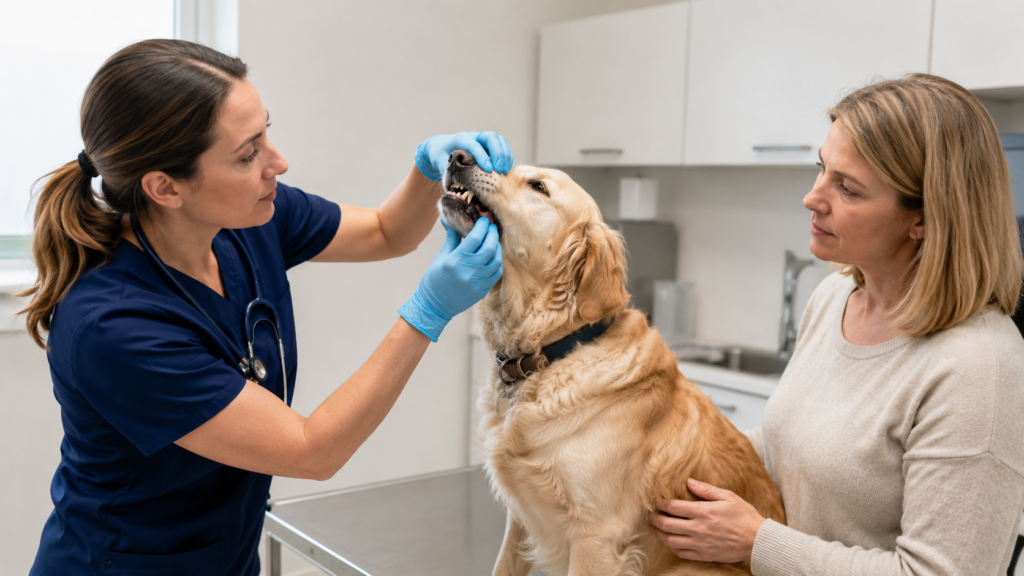
Even with great home care, some dogs still need professional dental cleanings. Small breeds, senior dogs, dogs with crowded teeth, and dogs with a history of dental disease may need extra attention.
Your veterinarian can examine your dog’s mouth and recommend the right care plan. Professional dental cleanings may include a complete oral exam, cleaning below the gumline, polishing, and dental X-rays when needed.
Home care helps maintain the mouth between veterinary visits, but it cannot remove heavy tartar below the gumline. That is why regular exams are important.
Dental Care Tips for Senior Dogs
Senior dogs often need extra dental support. As dogs age, they may develop gum sensitivity, worn teeth, missing teeth, or difficulty chewing. A senior dog that suddenly avoids hard food or chew toys may be experiencing mouth discomfort.
For older dogs, use a gentle toothbrush or wipe. Keep brushing sessions short and comfortable. Choose softer dental products if your vet recommends them, and avoid hard chews that may damage aging teeth.
Senior dogs may also benefit from more frequent dental checks. If you are already creating a safe home for an older pet, dental care should be part of that plan. Our article on dog-friendly home design includes ideas for making daily life easier for senior dogs.
Final Thoughts
At-home dog dental care is one of the simplest ways to support your dog’s long-term comfort and wellness. Brushing, safe chews, dental checks, and regular veterinary care all work together to protect your dog’s mouth.
You do not need a perfect routine on day one. Start small. Let your dog get used to mouth handling. Choose pet-safe tools. Reward calm behavior. Over time, dental care can become a normal part of your dog’s daily life.
In 2026, preventive pet care is all about everyday habits. A cleaner mouth, healthier gums, and more comfortable chewing can help your dog feel better from puppyhood through the senior years.